
From a 4-year Amazon UAE & Noon UAE Brand Owner
Finding a reliable supplier for Amazon UAE is one of the most important steps in building a profitable product business. Your supplier directly affects your product quality, cost per unit, profit margin, and long-term success. In this guide, you will learn how to find suppliers for Amazon UAE using Alibaba, local Dubai markets, and proven sourcing strategies.
As a brand owner selling on both Amazon UAE and Noon UAE for 4 years, I have sourced products locally in Dubai and internationally through Alibaba. This guide explains exactly how to find, verify, and negotiate with suppliers for Amazon UAE step by step. Once you have your supplier sorted, read our How to Find Winning Products guide and our How to Start Selling on Amazon UAE guide to complete your launch preparation.
Private Label vs Reselling: Choosing Your Supplier Strategy
Before you look for a supplier, you need to decide what kind of seller you want to be. This decision affects which suppliers you approach and how you negotiate with them.
Private Label
Private label means you source a product — usually from a manufacturer — and sell it under your own brand name. You put your logo on the packaging, control the product presentation, and build a brand that is yours. Private label gives you full control over your listing — no other seller can jump on your listing and undercut your price. It also gives you the ability to register your brand on Amazon and access Brand Registry tools. The downside is higher upfront investment and more complex sourcing.
Reselling
Reselling means you buy existing branded or unbranded products and sell them as-is on Amazon or Noon. It is faster to start and requires less initial investment. However, reselling comes with risks — other sellers can compete on the same listing, driving prices down, and you have no control over the product or packaging. For long-term brand building, private label is the stronger choice. For testing demand quickly with minimal investment, reselling is a valid starting point.
How to Find Suppliers on Alibaba for Amazon UAE
Alibaba.com is the world's largest B2B sourcing platform and the go-to source for most Amazon and Noon UAE sellers who want to private label products. It connects you directly with manufacturers and wholesalers in China, giving you access to millions of products at factory prices.
Alibaba is one of the most popular ways to find suppliers for Amazon UAE private label products because it connects sellers directly with manufacturers at factory prices.

How to Use Alibaba Effectively
- Search your product keyword and filter by supplier type — choose Verified Supplier or Gold Supplier for more reliability
- Look for factories that have been on the platform for 3+ years with strong trade assurance ratings
- Always check the product categories they manufacture — a factory specializing in your product type will produce better quality than a general factory
- Request a product catalogue and price list before opening a negotiation — this gives you a baseline to work from
- Check if the supplier has experience exporting to UAE or GCC — some suppliers are more familiar with UAE import requirements than others
Alibaba vs AliExpress — Know the Difference
Alibaba is for bulk orders directly from manufacturers — higher minimum order quantities but significantly lower per-unit costs. AliExpress is for smaller quantities at slightly higher prices — useful for testing a product before committing to a bulk order on Alibaba. Many sellers start with AliExpress to validate demand, then move to Alibaba for their main stock once the product proves itself.

Local Supplier Options in Dubai for Amazon UAE Sellers
One of the biggest advantages of being based in UAE is access to some of the best wholesale markets in the Middle East. These markets are unknown to most international sellers and give UAE-based sellers a real competitive edge — lower shipping costs, faster restocking, and the ability to physically inspect products before buying.
Deira — Dubai's Traditional Trading Hub
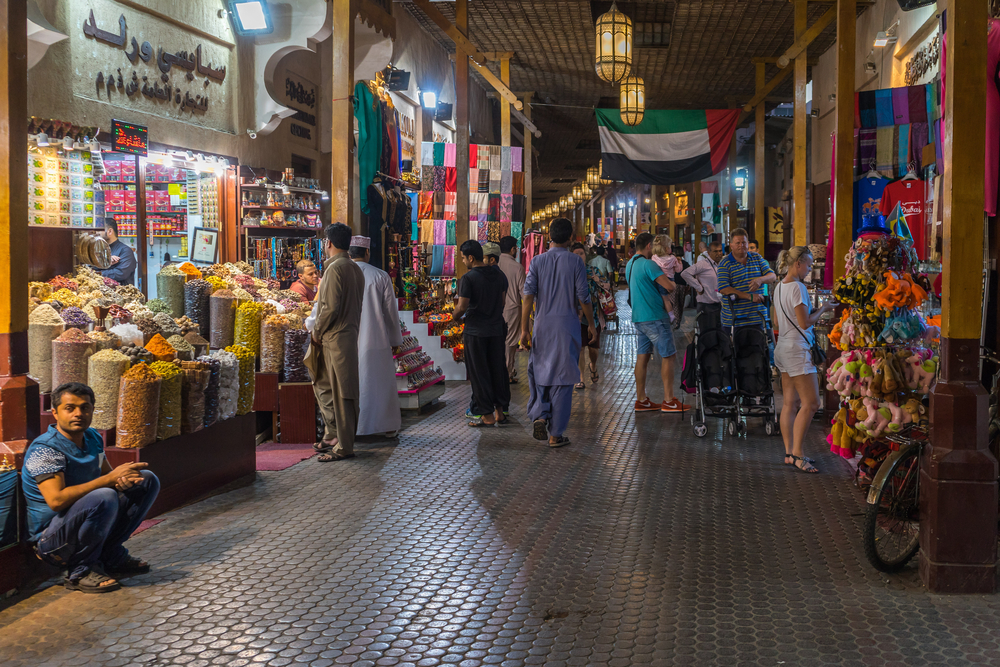
Deira is one of the oldest and most active wholesale trading areas in Dubai. The streets around Deira City Centre, Naif Road, and the Gold and Spice Souk area are packed with wholesale suppliers across almost every product category — household goods, electronics accessories, toys, fashion accessories, kitchenware, personal care, and more. Many of these suppliers import directly from China and sell at competitive wholesale prices. Walking through Deira with your product idea in mind often leads to finding exactly what you need — or discovering a product variation you had not considered.
Al Ras Area — Wholesale at Ground Level
Al Ras, located near Deira, is one of Dubai's most concentrated wholesale trading areas. The streets here are filled with small wholesale shops selling everything from general merchandise to niche product categories. Al Ras is particularly strong for everyday consumer goods, personal care products, small household items, and fashion accessories. Prices here are among the most competitive in Dubai for physical wholesale buying. As a UAE-based seller, this area is worth visiting regularly — new stock arrives constantly and you will often find products before they appear online.
Dragon Mart — The China Wholesale Hub in Dubai
Dragon Mart in International City is one of the largest Chinese trading centres outside China. It is an enormous wholesale mall with hundreds of shops selling products directly imported from China across every category imaginable — home goods, furniture, hardware, toys, electronics, fashion, sporting goods, and more. Dragon Mart suppliers often have the same products you find on Alibaba but you can physically see and test the product before buying. Minimum order quantities are often lower than Alibaba because you are buying from a trader rather than a factory.
For UAE sellers, this is one of the fastest ways to find suppliers for Amazon UAE without waiting for international shipping samples.

Yiwu Market — Jebel Ali
The Yiwu Market in Jebel Ali is a dedicated wholesale market bringing the Yiwu trading model — China's famous small commodities market — to Dubai. It houses a large number of Chinese wholesale suppliers offering products across hundreds of categories at factory-level prices. The market is especially strong for small consumer goods, gifts, stationery, kitchenware, and general merchandise. For UAE sellers, Yiwu Market Jebel Ali combines the pricing advantages of direct China sourcing with the convenience of a local physical market where you can inspect, compare, and buy on the same visit.
How to Verify Suppliers for Amazon UAE
Whether you are sourcing from Alibaba or a local Dubai market, verifying your supplier before committing to a large order is essential. Sending money to the wrong supplier — or ordering stock that does not match what was promised — is one of the most costly mistakes a new seller can make.
- Request a sample before placing any bulk order — always. A supplier who refuses to send a sample or charges an unreasonably high sample price is not worth dealing with
- On Alibaba, use Trade Assurance for all payments — this protects your money if the supplier fails to deliver as agreed
- Video call the supplier and ask to see their facility or warehouse — legitimate suppliers are happy to do this. Hesitation or excuses are a warning sign
- Search the company name on Google and check for any negative reviews or complaints from other buyers
- For local Dubai suppliers, visit in person before placing a large order — walk the shop, check the stock quality directly, and meet the owner or manager face to face
- Ask for references from other buyers if you are placing a large first order — established suppliers will have them readily available
How to Order Samples from Suppliers
Getting a sample before committing to bulk stock is non-negotiable. You cannot make a good product decision based on photos alone — quality, material, dimensions, and finish can all differ from what is shown online. Always order a sample first, no matter how confident you feel about the product.
- On Alibaba — contact the supplier, request a sample, and negotiate the sample price. Most suppliers charge a sample fee which is often refundable against your first bulk order. Always pay sample fees via Trade Assurance
- For Dragon Mart and Deira suppliers — you can usually buy a single unit or small quantity on the spot as a physical sample. This is one of the biggest advantages of local sourcing
- Test the sample exactly as your customer would — open the packaging, use the product, check the quality against your listing photos, and assess whether it matches your brand standards
- If the sample quality is good but something minor needs changing — packaging, logo placement, colour — negotiate this before the bulk order, not after

Minimum Order Quantity (MOQ) Explained
MOQ is the minimum number of units a supplier requires you to order. On Alibaba, MOQs can range from 50 units to 1,000 units or more depending on the product and factory. For new sellers, high MOQs can feel like a barrier — but they are almost always negotiable.
- Always ask the supplier what their lowest possible MOQ is for a first order — most factories will accept lower quantities from new buyers to start the relationship
- Offer a higher price per unit in exchange for a lower MOQ — suppliers care about total order value, not just quantity
- Frame your first order as a trial: tell the supplier you are testing the market and if it performs well, your next order will be significantly larger — this is honest and motivates suppliers to accommodate your request
- For local Dubai markets, MOQ is rarely an issue — Dragon Mart, Al Ras, and Deira suppliers typically sell in smaller quantities than Chinese factories
- Do not over-order on your first batch — 50 to 100 units is enough to test demand on Amazon UAE or Noon UAE without tying up too much capital
How to Negotiate with Suppliers for Better Pricing
Price negotiation is a skill that improves with practice — and it is expected by every supplier, whether on Alibaba or in Dubai's wholesale markets. Never accept the first price you are given. Suppliers quote higher than their bottom line because they expect negotiation.
Negotiation Principles That Work
- Always get quotes from at least 3 different suppliers before negotiating — knowing the market price gives you real leverage in the conversation
- Start lower than your target price — leave room to meet in the middle at a price you are happy with
- Reference competitor quotes without revealing the exact price — 'I have received lower quotes from other suppliers' is a legitimate negotiation statement
- Negotiate total value, not just unit price — ask for better packaging, logo printing, free samples, or faster lead times as part of the deal
- Be polite and respectful throughout — aggressive negotiation damages the relationship. Suppliers give their best prices and service to buyers they enjoy working with
- For local Dubai markets, cash payment often unlocks better prices than card — always ask if there is a better price for cash

Final Thoughts on Finding Suppliers for Amazon UAE
Your supplier is your business partner — even if they never know it. The quality they deliver, the price they offer, and the reliability they demonstrate will directly determine your customer reviews, your profit margin, and your ability to grow. Take your time finding the right one.
UAE-based sellers have a genuine advantage here. Access to Dragon Mart, Deira, Al Ras, and Yiwu Market Jebel Ali means you can source locally, inspect physically, and restock quickly — advantages that sellers in other countries simply do not have. Use them.
Once your sourcing is sorted, follow our complete selling guide series: How to Find Winning Products, How to Start Selling on Amazon UAE, How to List & Optimize Products, How to Send Products to Amazon UAE Warehouse, How to Rank Your Product, and Amazon UAE Pricing Strategy.
— Written by a 4-year Amazon UAE & Noon UAE Brand Owner
Frequently Asked Questions
Real sourcing questions from UAE sellers — answered directly.
Is it safe to pay suppliers on Alibaba?
Yes — if you use Alibaba's Trade Assurance payment system. Never pay a supplier via direct bank transfer outside of Trade Assurance for your first orders. Trade Assurance protects your payment and gives you a dispute resolution process if the supplier fails to deliver as agreed. Once you have established a long-term relationship with a supplier over multiple orders, other payment methods become lower risk.
How long does shipping from China to UAE take?
Sea freight from China to UAE (Jebel Ali port) typically takes 20 to 30 days. Air freight is faster at 5 to 10 days but significantly more expensive and only practical for small, high-value shipments. For most Amazon UAE sellers using FBA, sea freight is the standard choice for bulk stock. Always factor shipping time into your inventory planning — running out of stock because your reorder arrived late is one of the most common and avoidable mistakes in Amazon selling.
Do I need an import license to bring products into UAE?
Most products can be imported into the UAE under a standard trade license without a specific import permit. However, certain product categories — food, supplements, cosmetics, electronics with radio frequency components, children's toys — may require additional approvals from UAE regulatory authorities such as ESMA or the Ministry of Health. Always verify the import requirements for your specific product category before placing your first order.
Can I use a freight forwarder to handle shipping from China?
Yes — and for most new sellers, using a UAE-based freight forwarder is strongly recommended. A freight forwarder handles the entire shipping process — booking the shipment, managing customs clearance at Jebel Ali, and delivering to your doorstep or directly to Amazon's UAE fulfillment center. They deal with the paperwork and regulations so you do not have to. Ask your Alibaba supplier for freight forwarder recommendations as a starting point, or search for UAE freight forwarders with China sourcing experience.
Which is better — one supplier for everything or multiple suppliers?
Start with one reliable supplier per product and build that relationship before diversifying. Once your business grows, having a backup supplier for each product is smart risk management — if your primary supplier has quality issues, a production delay, or raises prices significantly, you have an alternative ready. But for a new seller, spreading attention across multiple suppliers too early creates unnecessary complexity. Master one sourcing relationship first.